Is Fingerprint Personality Testing (DMIT) Scientifically Proven or Pseudoscience?
Fingerprint-based personality and intelligence testing, including DMIT (Dermatoglyphics Multiple Intelligence Test), is pseudoscience. No peer-reviewed evidence supports claims that fingerprint patterns determine personality, intelligence, or brain lobe dominance. Scientific consensus classifies DMIT alongside astrology and homeopathy as epistemically unwarranted beliefs lacking empirical validation (Fasce, 2022; Fasce & Picó, 2019; Torres et al., 2023).
SCIENTIFIC EVIDENCE AND NEUROSCIENCE CRITIQUE
The Absence of Validated Neuroscientific Foundations
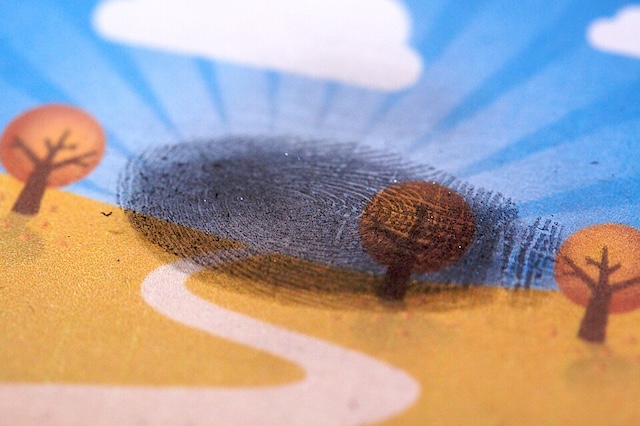
The central claim of DMIT—that fingerprint patterns (dermatoglyphics) reflect brain lobe dominance, cognitive potential, or personality traits—lacks support in peer-reviewed cognitive psychology, genetics, or educational neuroscience literature. While dermatoglyphic patterns do form during the same embryonic period as neural development (10th-16th gestational weeks) (Farah et al., 2025; Zaidi, 2016), this temporal coincidence does not establish a functional relationship between ridge patterns and cognitive or personality characteristics.
A study examining 1,000 children aged 4-7 years claimed to find associations between fingerprint patterns and IQ groups, reporting that “high intelligence levels showed the highest proportion of loops” while “low IQ groups showed more arches and whorls” (Prabhakaran et al., 2019). However, this research explicitly positions itself as exploratory, stating it “calls for further studies in the future to establish a definite relationship” (Prabhakaran et al., 2019). Critically, the study itself promotes DMIT by claiming “DMIT Test has accepted by the entire world and also from renowned universities” and that “Medical experts and approved clinical experience confirmed that finger prints provide accurate analysis of humans Multiple Intelligences” (Prabhakaran et al., 2019)—assertions made without citation of independent verification or peer-reviewed validation studies.
Research attempting to link dermatoglyphics to personality types (such as Myers-Briggs classifications) similarly acknowledges that while “dermatoglyphics and personality type are both influenced by genetic factors,” the studies merely “assess the analytical potential of the correlation” without establishing causation (Venurkar et al., 2022). A 2023 study on fingerprints and anaerobic power in athletes found “limited but meaningful data” but crucially noted the importance of “clearly distinguishing pseudoscience from science” and emphasized that “the only method of basing research on a scientific foundation regarding fingerprints is through observation and mathematical (experimental) calculations” (ÇINGI et al., 2023).
Contrast with Established Neurodevelopmental Research
Legitimate dermatoglyphics research focuses on associations with chromosomal abnormalities and neurodevelopmental disorders (e.g., Down syndrome, schizophrenia) where patterns serve as potential biomarkers of prenatal disruption (Farah et al., 2025). A comprehensive review of dermatoglyphics in schizophrenia notes that while “dermatoglyphics serve as a stable, lifelong record of developmental events,” the field suffers from “methodological variability and limited standardization that currently restrict clinical application” (Farah et al., 2025). Importantly, even in this legitimate medical context, dermatoglyphics are considered adjunctive markers requiring integration with genetic testing, neuroimaging, and clinical assessment—not standalone diagnostic tools (Farah et al., 2025; Rauniyar et al., 2024).
The leap from these narrow medical applications to claims about intelligence, personality, or “multiple intelligences” represents what philosophers of science term domain expansion without empirical warrant (Fasce, 2022). No studies in the cognitive neuroscience literature demonstrate that fingerprint patterns predict performance on validated intelligence tests, personality inventories, or academic achievement when controlling for socioeconomic, educational, and genetic confounds.
OFFICIAL STANCE OF ACADEMIC BODIES
Formal Condemnations and Professional Warnings
While the provided references do not contain explicit statements from the Indian Psychiatric Society specifically condemning DMIT, multiple professional and academic sources classify fingerprint-based personality/intelligence testing within the broader category of pseudoscience that professional bodies actively discourage.
The American Speech-Language-Hearing Association (ASHA) provides a relevant parallel in its formal position against similar biometric pseudoscience. ASHA explicitly characterizes Rapid Prompting Method (RPM)—another technique claiming to reveal hidden abilities through facilitator-mediated communication—as “pseudoscience” due to lack of independent validation (Finn, 2019). ASHA’s statement emphasizes that “providing services to students with communication disorders…requires time and effort” and warns that “pseudoscientific treatments typically provide simple solutions, offer unwarranted promises” (Finn, 2019). This institutional stance mirrors concerns applicable to DMIT: both offer appealing shortcuts to complex assessments while lacking scientific validation.
Academic Consensus on Demarcation Criteria
The scientific literature consistently applies demarcation criteria that exclude DMIT from legitimate science. Fasce and Picó’s validated Pseudoscientific Belief Scale (PSEUDO; α = 0.90) establishes that pseudosciences are characterized by: (a) claims of scientific status without empirical warrant, (b) unfalsifiable or untested assertions, and (c) resistance to contrary evidence (Fasce & Picó, 2019). DMIT satisfies all three criteria: it claims scientific legitimacy (Prabhakaran et al., 2019; Zaidi, 2016), makes predictions that are either too vague to test or have not been subjected to rigorous falsification attempts, and persists despite absence of peer-reviewed validation.
Research on pre-service teachers’ pseudoscientific beliefs found that “some educators consider homeopathy a scientific discipline” despite its unscientific nature, and noted that “pseudosciences have spaces even in university settings” (Solbes et al., 2018). This phenomenon extends to DMIT, which has been marketed through educational institutions despite lacking the empirical foundation required for evidence-based educational practice (Prabhakaran et al., 2019; Venurkar et al., 2022).
A study of Turkish pre-service science teachers found that participants “generally did not hold strong beliefs on distinguishing science and pseudoscience” and that “their teacher education program did not facilitate favorable beliefs” regarding this distinction (Uçar & Şahin, 2018). This educational gap enables pseudosciences like DMIT to gain traction among educators who lack training in scientific epistemology.
THE ROLE OF THE BARNUM EFFECT IN FINGERPRINT TESTS
Psychological Mechanisms of Perceived Accuracy
The perception that DMIT results are “highly accurate” can be explained through well-established cognitive biases, particularly the Barnum Effect (also called the Forer Effect). This phenomenon describes people’s tendency to accept vague, general personality descriptions as uniquely applicable to themselves (Hayes, 2021; Torres et al., 2023).
Forer’s classic 1949 study demonstrated that individuals rate universally valid personality statements as highly accurate self-assessments (Torres et al., 2023). Research confirms that “people have disposition of accepting vague or trivial personality statements” (Uçar & Şahin, 2018), and Forer himself “linked this effect to epistemically unwarranted beliefs such as those related to crystal-gazing, astrology or graphology” (Torres et al., 2023). DMIT reports typically contain statements sufficiently general to apply broadly while appearing personalized—precisely the conditions that maximize Barnum Effect susceptibility.
Cognitive and Social Reinforcement Mechanisms
Multiple psychological factors contribute to DMIT’s perceived validity:
Confirmation Bias and Selective Attention: Users tend to notice and remember aspects of DMIT reports that align with their self-concept while discounting inconsistencies (Fasce, 2022). Research on pseudoscientific beliefs shows that “believers in pseudoscience obtain higher scores” on intuitive thinking measures and lower scores on cognitive reflection tests (Torres et al., 2023), suggesting reliance on System 1 (fast, intuitive) rather than System 2 (analytical, critical) thinking.
Explanatory Satisfaction: The explanation-polarisation model demonstrates that pseudosciences spread through “perceived explanatory satisfaction and group polarisation” (Fasce, 2022). DMIT provides simple, appealing explanations for complex phenomena (intelligence, personality, career aptitude), creating subjective feelings of understanding without requiring genuine comprehension of underlying mechanisms. Research shows that “courses that directly promoted a motivational state of distrust in pseudoscience produced a reduction of those beliefs, whereas general education classes on critical thinking and research methods did not” (Fasce, 2022), indicating that emotional and motivational factors—not just knowledge deficits—sustain pseudoscientific beliefs.
Authority and Scientific Appearance: Pseudosciences gain credibility through “scientific appearance”—using technical terminology, presenting data in scientific formats, and citing credentials(Ramalho & Marinho, 2026). DMIT practitioners frequently reference “neuroscience, genetics, dermatoglyphics, psychology and embryology” (Prabhakaran et al., 2019) and claim validation by “scientists and Medical experts” (Prabhakaran et al., 2019) without providing verifiable peer-reviewed sources. This strategy exploits the public’s trust in scientific authority while avoiding actual scientific scrutiny.
Social Proof and Group Dynamics: Research on epistemically unwarranted beliefs demonstrates that “as the group influences a newly initiated person, their conceptions become more ingrained and acquire additional layers of complexity” (Souza & Oliveira, 2024). Parents and educators who invest in DMIT testing may experience cognitive dissonance if questioning its validity, leading to defensive rationalization and further commitment (Fasce, 2022).
A study on critical thinking and fake news detection found that “scientific appearance can be defined as the attempt to make an argument appear scientific when it is not” and noted that “scientific appearance is also a common practice in alternative therapies, which are considered a type of pseudoscience”. DMIT employs precisely this strategy, using biometric measurement technology and computerized reports to create an aura of scientific rigor without underlying empirical validation.
SCIENTIFICALLY VALIDATED ALTERNATIVES
Evidence-Based Psychometric and Cognitive Assessments
Parents and educators seeking legitimate insights into children’s abilities and personality should rely on scientifically validated instruments with established reliability, validity, and normative data:
1. Big Five Personality Model (Five-Factor Model)
The Big Five represents the most robust, empirically supported framework for personality assessment (Alper et al., 2024; Torres et al., 2023). Comprising five broad dimensions—Openness, Conscientiousness, Extraversion, Agreeableness, and Neuroticism—this model demonstrates:
- Cross-cultural validity across diverse populations (Alper et al., 2024)
- Predictive validity for academic achievement, occupational success, and mental health outcomes
- Test-retest reliability and convergent validity with multiple assessment methods
- Developmental appropriateness with age-adapted versions for children and adolescents
Unlike DMIT’s unvalidated claims, Big Five assessments undergo rigorous psychometric evaluation and continuous refinement based on empirical evidence (Torres et al., 2023).
2. Standardized Cognitive Ability Tests
For assessing intellectual functioning, validated intelligence tests administered by qualified psychologists provide reliable, norm-referenced data:
- Wechsler Intelligence Scales (WISC for children, WAIS for adults): Comprehensive assessment of verbal comprehension, perceptual reasoning, working memory, and processing speed
- Stanford-Binet Intelligence Scales: Measures fluid reasoning, knowledge, quantitative reasoning, visual-spatial processing, and working memory
- Kaufman Assessment Battery for Children (KABC): Emphasizes problem-solving and information processing
These instruments demonstrate strong psychometric properties, including internal consistency (α > 0.90), test-retest reliability, and predictive validity for academic performance (Prabhakaran et al., 2019). Critically, they are administered by trained professionals who interpret results within developmental, cultural, and educational contexts—not reduced to simplistic fingerprint classifications.
3. Evidence-Based Educational and Career Guidance
For educational planning and career counseling, legitimate alternatives include:
- Interest Inventories (e.g., Strong Interest Inventory, Holland’s RIASEC model): Validated measures of vocational interests with extensive occupational databases
- Academic Achievement Tests: Standardized assessments (e.g., Woodcock-Johnson, Wechsler Individual Achievement Test) measuring specific skill domains
- Executive Function Assessments: Validated measures of attention, planning, organization, and self-regulation relevant to learning
- Comprehensive Psychoeducational Evaluations: Integrating cognitive, academic, behavioral, and emotional assessments conducted by licensed school psychologists
These approaches share common features absent from DMIT: empirical validation through peer-reviewed research, standardized administration and scoring procedures, established norms for interpretation, and integration with educational and clinical best practices (Travers, 2016).
The Evidence-Based Practice Framework
Professional standards in psychology and education require that interventions and assessments demonstrate efficacy through controlled research (Travers, 2016). The evidence-based practice movement emphasizes three components:
- Best available research evidence: Peer-reviewed studies demonstrating reliability and validity
- Clinical expertise: Professional judgment informed by training and experience
- Client values and context: Consideration of individual circumstances
DMIT fails the first criterion entirely, as it lacks the foundational research base required for evidence-based practice. A review of pseudoscience in special education emphasizes that “unproven and ineffective interventions are inevitably harmful and require professionals to adopt a conservative approach that both minimizes potential for harm and maximizes potential for educational benefit” (Travers, 2016). This principle applies equally to assessment tools: using unvalidated instruments risks misguiding educational decisions, wasting resources, and potentially harming children through inappropriate placements or interventions.
CONCLUSION
The scientific evidence unequivocally demonstrates that fingerprint-based personality and intelligence testing, including DMIT, constitutes pseudoscience. No peer-reviewed research establishes that dermatoglyphic patterns predict cognitive abilities, personality traits, or educational potential. The perceived accuracy of DMIT results reflects well-documented cognitive biases—particularly the Barnum Effect—rather than genuine diagnostic validity. Professional bodies and academic consensus classify such practices alongside other epistemically unwarranted beliefs that exploit scientific appearance without empirical foundation.
Parents and educators should instead rely on scientifically validated alternatives: the Big Five personality model for trait assessment, standardized cognitive ability tests administered by qualified psychologists, and evidence-based educational evaluations. These approaches provide reliable, valid, and ethically sound foundations for understanding children’s development and guiding educational decisions. Rejecting pseudoscientific shortcuts in favor of rigorous, evidence-based assessment protects children’s welfare and upholds the integrity of educational practice.
References:
- Alper, S., Düzgün, A., Atalay, E. D., & Yılmaz, O. (2024). Perceived Corruption is a Robust Associate of Conspiracy, Paranormal, and Pseudoscience Beliefs. https://doi.org/10.31234/osf.io/b5928
Farah, E. B., Beydoun, K., Nasr, L., Chokor, Z., Ghanem, S., Fassih, I., - Moghnieh, R., Tlaiss, Y., & Farhat, H. (2025). Dermatoglyphics and schizophrenia: A comprehensive review of neurodevelopmental biomarkers. World Journal of Psychiatry, 15(11). https://doi.org/10.5498/wjp.v15.i11.112206
- Fasce, A. (2022). The explanation-polarisation model: Pseudoscience spreads through explanatory satisfaction and group polarisation. Journal of Social and Political Psychology, 10(2), 693–705. https://doi.org/10.5964/jspp.8051
- Fasce, A., & Picó, A. (2019). Conceptual foundations and validation of the Pseudoscientific Belief Scale. Applied Cognitive Psychology, 33(4), 617–628. https://doi.org/10.1002/acp.3501
- Finn, P. (2019). Countering the False Promise of Pseudoscience in Schools. Asha Leader, 24(7), 36–37. https://doi.org/10.1044/leader.scm.24072019.36
- Hayes, A. M. (2021). Popper’s Marxist: Pseudoscience As Policy Problem. https://doi.org/10.32920/ryerson.14665263.v1
- Prabhakaran, M., Chakrabarti, S., & Ragunath, G. (2019). DERMATOGLYPHICS AND INTELLIGENCE QUOTIENT (IQ) IN CHILDREN OF THE AGE GROUP 4 TO 7 YEARS IN THE SOUTH INDIAN POPULATION. Journal of Evolution of Medical and Dental Sciences, 8(14), 1178–1187. https://doi.org/10.14260/jemds/2019/261
- Ramalho, T., & Marinho, S. (2026). Media effects in the use of pseudoscience: A systematic literature review (1900–2022). Cultures of Science, 9(2), 125–144. https://doi.org/10.1177/20966083261440626
- Rauniyar, S. P., Chimurkar, V., Anjankar, V., & More, A. (2024). Exploring Dermatoglyphics as a Potential Indicator of Female Infertility: A Review of Current Evidence and Future Directions. South Eastern European Journal of Public Health, 261–271. https://doi.org/10.70135/seejph.vi.1669
- Solbes, J., Fons, R. P., & Sales, M. C. D. (2018). ¿En qué grado afectan las Pseudociencias al profesorado? Una mirada al pensamiento de los docentes de ciencias en formación. Metode Science Studies Journal, 188–195. https://doi.org/10.7203/metode.8.9943
- Souza, D. V. L. de, & Oliveira, I. M. de. (2024). Pseudosciences and the Current Challenges Imposed on Science Teaching. Educação & Realidade, 49. https://doi.org/10.1590/2175-6236121157vs02
- Torres, M. N., Barberia, I., & Rodríguez‐Ferreiro, J. (2023). A validation of the Pseudoscience Endorsement Scale and assessment of the cognitive correlates of pseudoscientific beliefs. Humanities and Social Sciences Communications, 10(1). https://doi.org/10.1057/s41599-023-01681-3
- Travers, J. C. (2016). Evaluating Claims to Avoid Pseudoscientific and Unproven Practices in Special Education. Intervention in School and Clinic, 52(4), 195–203. https://doi.org/10.1177/1053451216659466
- Uçar, M., & Şahin, E. (2018). Preservice Science Teachers’ Discrimination Level of Science and Pseudoscience. Science Education International, 29(4), 267–273. https://doi.org/10.33828/sei.v29.i4.9
- Venurkar, S., Srivastava, T., Shukla, S., Acharya, S., Saha, S., & Deshpande, V. (2022). Decoding Human Personality Through Dermatoglyphics. Cureus. https://doi.org/10.7759/cureus.30445
- Zaidi, S. T. H. (2016). Dermatoglyphics: A Brief Review. International Journal of Advanced and Integrated Medical Sciences, 1(3), 111–115. https://doi.org/10.5005/jp-journals-10050-10039
- ÇINGI, H. İ., Çaldıran, S., Yılmaz, M., & ÇINGI, Ö. (2023). An Investigation of the Relationship between Fingerprints and Anaerobic Powers of Sports Sciences Students. Sosyolojik Bağlam Dergisi, 4(2), 182–192. https://doi.org/10.52108/2757-5942.4.2.6