The Complete Scientific Guide to Echinacea: Immune Benefits, Species Profiles, and Clinical Efficacy
Echinacea is one of the most popular and commercially successful herbal supplements in the world. Driven by the widespread belief that it can boost the immune system, prevent infections, and shorten the common cold, annual sales of this herb reach billions of dollars globally. However, the scientific reality of Echinacea is far more nuanced and complex than general retail marketing suggests.
To make intelligent health choices, it is essential to look past viral claims and evaluate this herb through the objective lens of clinical research. This cornerstone guide provides a complete, science-based review of Echinacea, covering its botanical identity, active chemical compounds, biological mechanisms of action, clinical effectiveness, and safety profiles.
Table of Contents
- Understanding the Botanical Profiles of Echinacea
- The Chemical Complexity: Key Bioactive Compounds
- Immunopharmacology: How Echinacea Interacts with the Body
- Clinical Efficacy: What the Science Says About Colds and Influenza
- Safety, Side Effects, and Drug Interactions
- Practical Guidelines for Smart Consumers
1. Understanding the Botanical Profiles of Echinacea
The genus Echinacea belongs to the Asteraceae (Compositae) family and is native exclusively to North America. While botanists recognize several distinct species, only three are of major medicinal and commercial importance:
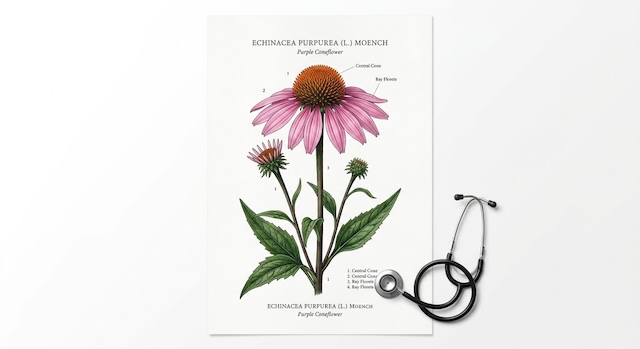
- Echinacea purpurea (Purple Coneflower): This is the most widely cultivated and utilized species. It grows as a robust perennial herb with large, showy purple-pink flowers. It features a conical central disk of stiff, spine-tipped bracts that resemble a hedgehog (the basis for the genus name derived from the Greek word echinos). E. purpurea has a fibrous root system, and both its aerial parts (herb) and roots are used medicinally.
- Echinacea angustifolia (Narrow-Leaved Purple Coneflower): A smaller plant characterized by narrow, lanceolate leaves and a prominent taproot system. When the dark taproot of E. angustifolia is chewed, it produces a distinct tingling and numbing sensation in the mouth, which is traditionally used as an indicator of product quality.
- Echinacea pallida (Pale Purple Coneflower):Intermediate in size, this species features drooping, pale purple flowers and a taproot system. Unlike E. angustifolia, its roots do not produce a strong numbing sensation because they contain different primary chemical compounds.
These species-specific differences are vital. Products made from different parts of these three species contain fundamentally different active profiles, which heavily contributes to the mixed results seen in clinical studies.
2. The Chemical Complexity: Key Bioactive Compounds
Echinacea does not contain a single “magic” active ingredient. Instead, its biological activity is driven by a complex mixture of compound classes. The primary bioactive molecules include:
- Alkamides (Alkylamides): These are fatty acid amides that represent the most unique active compounds in Echinacea. They are highly concentrated in the roots of E. purpurea and E. angustifolia, but are virtually absent or found only in trace amounts in E. pallida. Alkamides are responsible for the local numbing effect on the tongue and are highly bioavailable, absorbing rapidly into the bloodstream within minutes of oral ingestion.
- Caffeic Acid Derivatives: These are major phenolic compounds that vary by species. E. purpurea is rich in cichoric acid, which is a potent antioxidant. E. angustifolia and E. pallida roots are instead characterized by high levels of echinacoside, which is virtually absent from E. purpurea. Cichoric acid is highly sensitive to degradation during storage, creating quality control issues.
- Polysaccharides and Glycoproteins: These are high-molecular-weight molecules found in all three species. They are known for stimulating immune cells in laboratory settings. Because they are large molecules, they are poorly absorbed in the human digestive tract, and their oral effects are likely mediated through interactions with gut-associated lymphoid tissues.
- Ketoalkenes and Ketoalkynes: Structurally related to alkamides, these lipophilic molecules are unique to E. pallida roots and contribute to its distinct pharmacological properties.
3. Immunopharmacology: How Echinacea Interacts with the Body
Research demonstrates that Echinacea does not simply boost the immune system in a single direction. Rather, it acts as an immunomodulator, producing context-dependent effects:
- Activation of Innate Immunity: Polysaccharide and glycoprotein fractions have been shown to activate macrophages (white blood cells responsible for engulfing pathogens). This activation leads to increased phagocytosis (pathogen clearing) and the production of protective signaling molecules called cytokines, such as tumor necrosis factor-alpha and interleukins.
- Anti-Inflammatory Modulation: In contrast to immune activation, the alkamide fraction of Echinacea acts as an anti-inflammatory agent. Alkamides bind to cannabinoid type 2 (CB2) receptors on immune cells, inhibiting the activation of inflammatory genes and reducing excessive, tissue-damaging inflammation. This dual-action of activating defense mechanisms while controlling inflammation is highly valuable during a viral infection.
- Direct Antiviral Action: In laboratory settings, standardized Echinacea preparations have shown direct antiviral and virucidal activity against multiple respiratory pathogens, including rhinovirus, influenza viruses (including oseltamivir-resistant strains), respiratory syncytial virus (RSV), and certain coronaviruses.
4. Clinical Efficacy: What the Science Says About Colds and Influenza
With over eighty clinical trials conducted, the therapeutic efficacy of Echinacea remains a subject of intense scientific discussion. The outcomes are generally split between prevention and active treatment:
- Treatment of Established Colds: Large systematic reviews, such as the authoritative Cochrane Review, indicate that the overall evidence for Echinacea as a cure for established colds is weak. However, specific, well-characterized preparations (particularly standardized E. purpurea aerial part extracts) show modest benefits. When taken at the very first sign of symptoms, these extracts can reduce the duration of a cold by 0.5 to 1.5 days and slightly decrease overall symptom severity.
- Prevention of Colds: The evidence for Echinacea as a preventive supplement is somewhat more consistent. Meta-analyses suggest that regular, prophylactic use can reduce the overall risk of developing a cold by approximately 10 to 35 percent. This benefit is most pronounced in susceptible individuals, such as those experiencing high stress levels, poor sleep, or frequent respiratory infections.
- Comparison to Antivirals: One notable randomized, double-blind clinical trial compared a hot drink preparation of E. purpurea (Echinaforce) directly against the prescription antiviral oseltamivir (Tamiflu) in patients with early influenza symptoms. The study found that the Echinacea preparation was as effective as oseltamivir, with comparable recovery rates and fewer complications.
5. Safety, Side Effects, and Drug Interactions
Echinacea is generally well-tolerated by the vast majority of consumers, but there are important safety considerations to keep in mind:
- Common Side Effects: Mild gastrointestinal symptoms, such as nausea, temporary abdominal discomfort, or an unpleasant taste, are reported by some users. Numbness or tingling of the mouth is a natural pharmacological response to alkamides and is not a sign of toxicity.
- Allergic Reactions: As a member of the Asteraceae family, Echinacea can trigger allergic reactions. Individuals with known allergies to ragweed, marigolds, daisies, or chrysanthemums must use extreme caution. Allergic reactions can range from skin rashes and hives to more severe bronchospasms.
- Autoimmune and Progressive Systemic Diseases:Regulatory monographs, including the German Commission E, advise against using Echinacea in individuals with progressive systemic or autoimmune diseases (such as tuberculosis, multiple sclerosis, lupus, or HIV infection). The theoretical concern is that immunostimulation could worsen these conditions, although direct clinical evidence of harm is sparse.
- Moderate Drug Interactions: Unlike St. John’s Wort, which is a potent inducer of liver enzymes, Echinacea has a modest drug interaction profile. It can modestly inhibit the CYP3A4 and CYP1A2 liver enzymes, which may slightly increase the blood levels of drugs like caffeine or medications with a narrow therapeutic window. Caution is highly recommended when combining Echinacea with immunosuppressant medications, as it could theoretically counteract their efficacy.
6. Practical Guidelines for Smart Consumers
To get the most out of Echinacea while minimizing safety risks, consumers should follow these guidelines:
- Choose Standardized Products: Due to high product variability in the supplement market, select extracts standardized to specific active marker compounds, such as total phenolics, cichoric acid, or alkamides.
- Start Treatment Immediately: For treating acute upper respiratory symptoms, begin taking Echinacea within 24 hours of symptom onset.
- Adhere to Time Limits: To avoid potential tolerance or theoretical immune fatigue, limit continuous prophylactic use to a maximum of 8 to 12 weeks, as recommended by traditional safety guidelines.
- Confirm Quality Standards: Look for brands that possess independent, third-party testing verifications (such as USP or NSF International) to ensure the product is free from heavy metals, pesticides, or unauthorized species substitution.
References
- The Lancet Infectious Diseases (Meta-Analysis on Prevention and Treatment): https://doi.org/10.1016/S1473-3099(07)70160-3
- JAMA (Clinical Trial on Pediatric Efficacy and Safety):https://doi.org/10.1001/jama.290.21.2824
- New England Journal of Medicine (Evaluation of E. angustifolia in Experimental Infections):https://doi.org/10.1056/NEJMoa044441
- Current Therapeutic Research (Echinacea vs Oseltamivir Head-to-Head Trial):https://doi.org/10.1016/j.curtheres.2015.04.001
- Virology Journal (Antiviral Activity of Echinacea Against SARS-CoV-2 and Coronaviruses):https://doi.org/10.1186/s12985-020-01401-2